
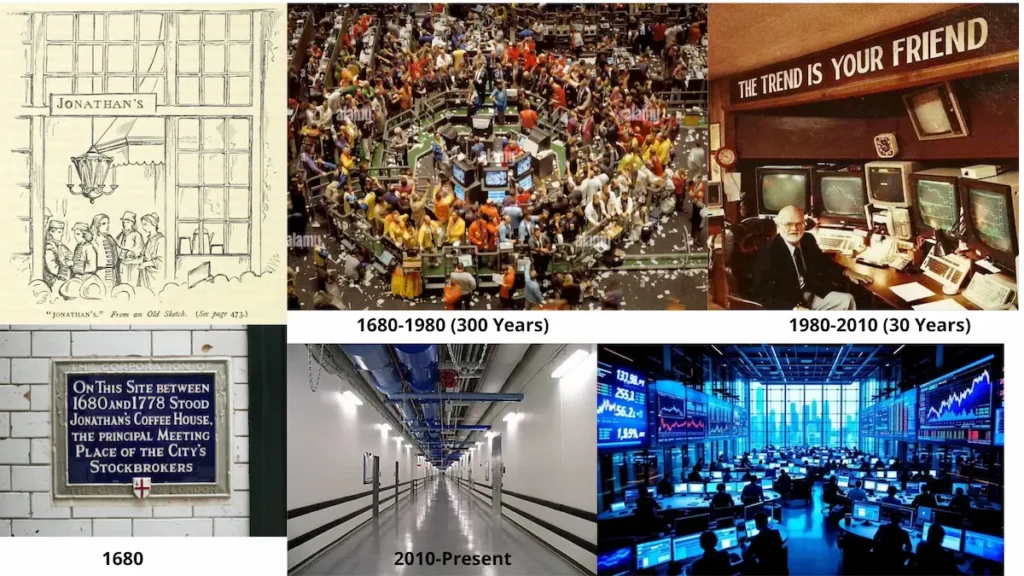
When exploring stock market history, Did you know that the world-famous London Stock Exchange actually started in a small, noisy coffee shop called Jonathan’s Coffee House?
The Birthplace of Trading: Opened around 1680 by Jonathan Miles in Change Alley, this coffee house was a hub of chaos and intrigue. In 1696, it was even linked to a plot to assassinate King William III.
However, history changed in 1698. After being expelled from the Royal Exchange for their “rowdy behavior,” stock dealers migrated here. It was within these walls that John Castaing began posting the first systematic lists of stock and commodity prices, officially turning a coffee shop into the foundation of the London Stock Exchange.
Not long after, the market faced its first major test. The South Sea Bubble (1720) remains one of the most critical lessons in stock market history, teaching investors about the dangers of hype
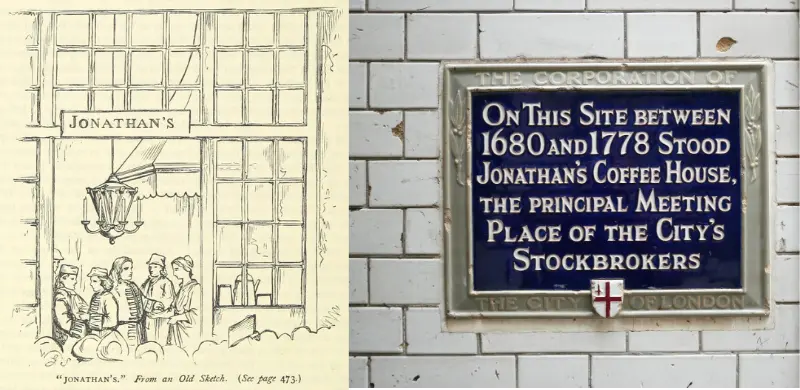
Jonathan’s Coffee House – The birthplace of the London Stock Exchange.
It sounds unbelievable today. We are used to seeing screens flashing red and green numbers, complex charts, and silent servers processing billions of dollars in milliseconds. However, studying stock market history reveals that the core purpose of trading hasn’t changed: it is still about capital, risk, and opportunity.
What has changed is the method. We have moved from shouting across a room to clicking a mouse, and now, to letting Artificial Intelligence (AI) make decisions for us.
In this article, AI Review Smart takes you on a journey through time to understand how technology has revolutionized trading and why the future belongs to AI.
1. The Human Era: From Coffee Houses to Wall Street
The story of stock market history officially begins in 1602 in Amsterdam. The Dutch East India Company (VOC) became the first company to issue stocks to the public. It was a revolutionary idea: getting thousands of people to fund a risky voyage in exchange for a share of the profits.
However, the trading culture evolved dramatically as it moved West—first to the coffee houses of London, and finally, to a street in New York.
London: The Coffee House Origins (1698)
Opened around 1680 by Jonathan Miles in Change Alley, Jonathan’s Coffee House was a hub of chaos and intrigue. It was a chaotic start to what would become a glorious chapter in stock market history. History changed in 1698 when stock dealers, expelled from the Royal Exchange for “rowdy behavior,” migrated here. Within these walls, John Castaing began posting systematic price lists, turning a coffee shop into the foundation of the London Stock Exchange. This transition from formal halls to coffee shops is a unique twist in stock market history.
New York: The Buttonwood Tree (1792)
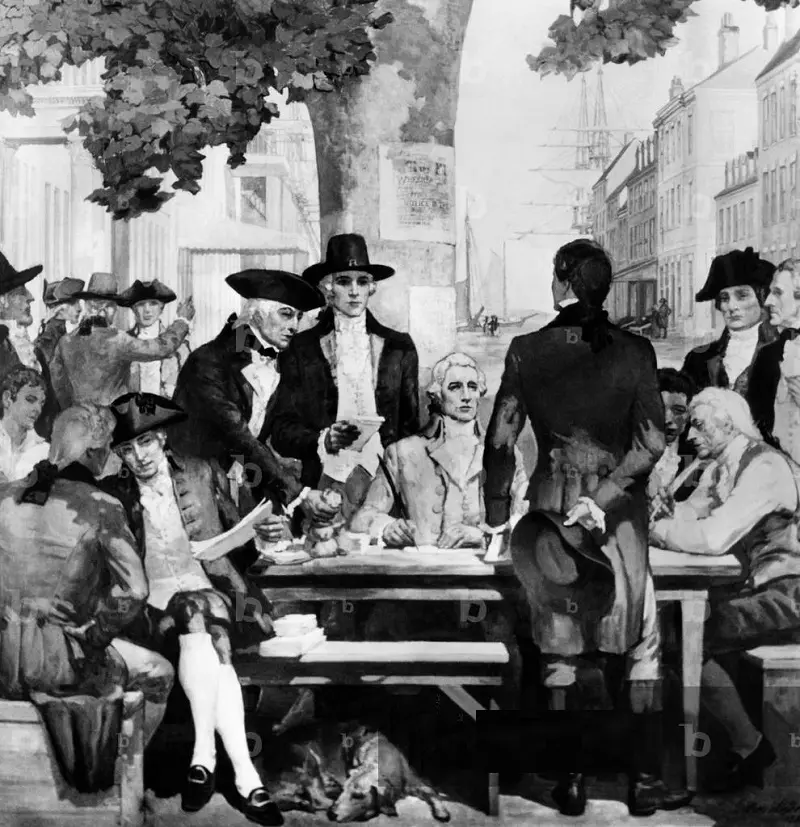
Meanwhile, across the Atlantic, the American stock market was born under a tree. In 1792, 24 stockbrokers gathered beneath a buttonwood tree on Wall Street to sign the famous Buttonwood Agreement. This document established the rules for trading securities and laid the groundwork for what would become the New York Stock Exchange (NYSE).
The “Open Outcry” System
For the next two centuries, whether in London or New York, trading remained a purely human endeavor.
The Mechanism: Traders gathered in “the pit,” using a complex language of hand signals and shouting to buy and sell shares.
The Limitation: It was high-adrenaline but flawed. Executing a trade took minutes, spreads were wide, and errors were common because humans get tired.
- Key Insight: In this era, information traveled at the speed of a rumor. If you weren’t physically on the floor, you were the last to know.
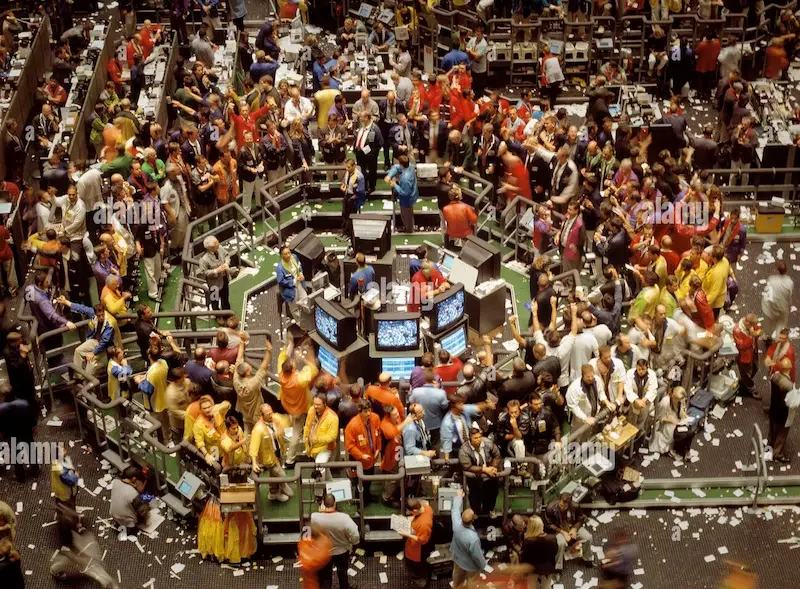
Video: Inside the chaos of the Chicago Board of Trade (1980s).
The End of an Era This human-dominated system ruled the financial world for nearly 300 years—from the late 1600s until the 1980s. It survived wars, depressions, and revolutions. However, it could not survive the arrival of the microchip. As the 1980s approached, the noise of the trading floor was about to be replaced by the hum of servers.
2. The Digital Era: The Rise of Screens (1980s – 2010s)
Before screens, the ticker tape was the primary tool used throughout early stock market history to track prices. The “Open Outcry” system died not with a whimper, but with a Big Bang.
In 1971, the NASDAQ was founded as the world’s first electronic stock market. However, the real turning point came in 1986 with the deregulation of the UK financial markets (known as the “Big Bang”). Suddenly, traders didn’t need to be in a physical pit to buy shares. They could do it from a screen. A pivotal moment in stock market history was the introduction of the Bloomberg Terminal in the early 1980s. Before this, traders relied on phone calls and paper tickets. But with the arrival of the ‘Orange Screen,’ everything changed.
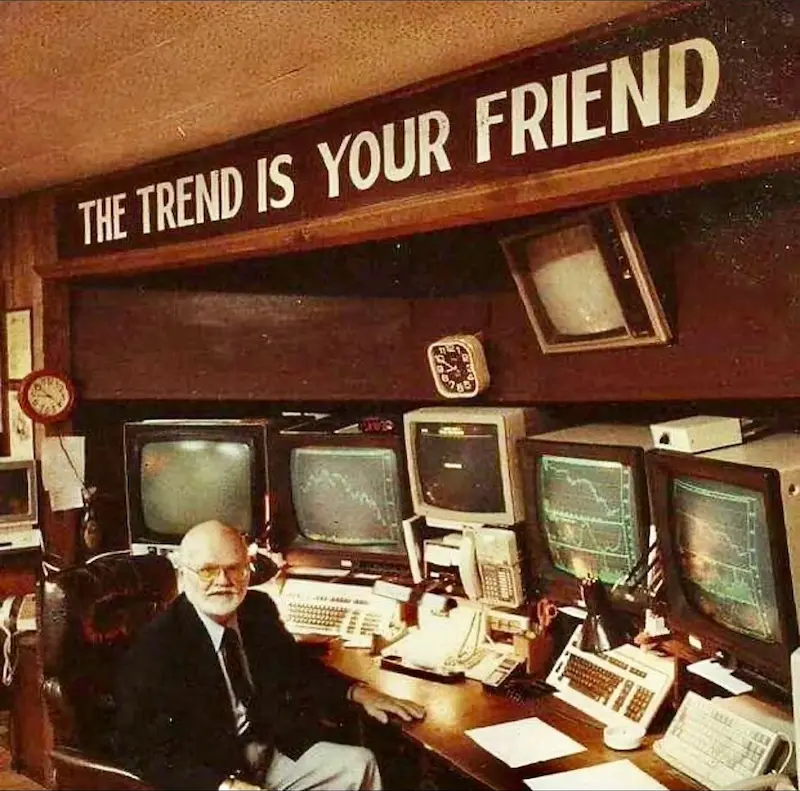
The Great Contrast: From Chaos to Calm Look at the NASDAQ image above. Notice what is missing? The noise. Comparing the speed of human traders to AI bots shows the most dramatic evolution in stock market history.
The Old Way (Open Outcry): Trading was a physical sport. Success depended on how loud you could shout and how fast you could wave your hands. It was a battle of Muscles & Lungs.
The New Way (Digital Era): Trading became an intellectual pursuit. The NASDAQ floor was quiet, not because nothing was happening, but because the war had moved inside the machines. It was now a battle of Silicon & Speed.
- However, this new speed came with risks. The 1987 crash was a defining moment in modern stock market history, proving that technology could also amplify panic.
The Shift from Floor to Cloud
By the 1990s and early 2000s, the noisy trading floors began to go silent.
Speed: Instead of minutes, trades could be executed in seconds.
Access: For the first time, ordinary people could trade stocks from their home computers using the internet. The “Day Trader” was born.
The New King: The Bloomberg Terminal. Launched in 1981, this system changed everything. Before Bloomberg, analyzing markets meant digging through piles of paper. The Terminal provided real-time data, news, and analytics instantly on a specialized screen.
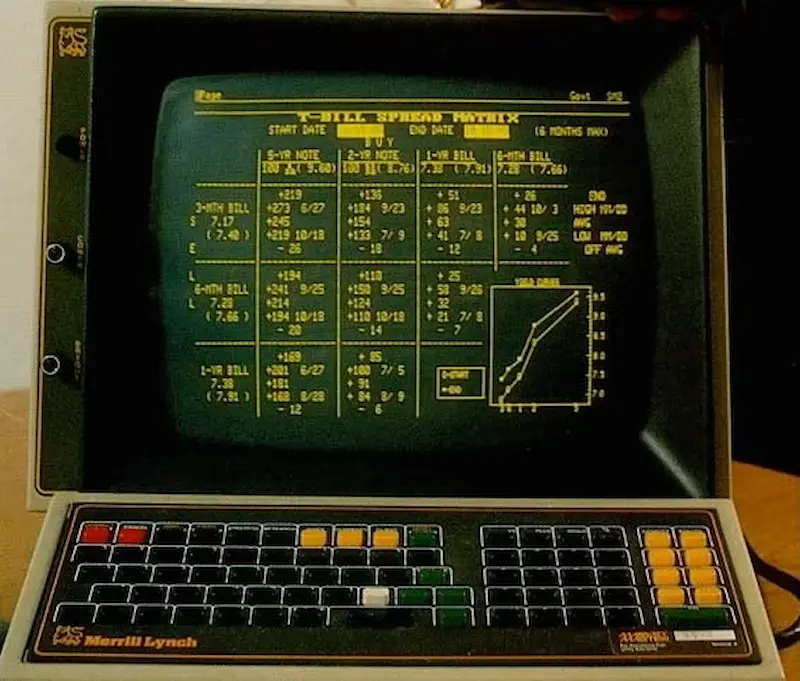
Why it mattered: It was expensive—costing over $20,000/year (equivalent to about $100,000/year today). This made it the ultimate status symbol. If you had a Bloomberg Terminal on your desk, you weren’t just guessing; you had the power of information.
Video: The “Big Bang” (1986) – The historic moment London switched from open outcry to electronic trading.
The Flaw: While computers made trading faster, they were still just tools controlled by humans. Humans still hesitated, panicked, and let emotions drive their decisions. The market needed something even faster and colder.
The Limits of Biology The era of the “Screen” dominated for roughly 30 years—from the 1980s to the 2010s. It democratized finance, allowing anyone with an internet connection to trade. However, by the late 2000s, this system hit a wall: Biology. No matter how fast the computer was, a human finger still took 0.15 seconds to click a mouse. In the modern market, that is an eternity. The screens were about to become irrelevant—not because trading stopped, but because humans were no longer fast enough to watch it.
To go faster, we had to remove the slowest part of the equation: Us.
3. The AI Era: The Silent Revolution (2010s – Present)
The next revolution didn’t happen on a trading floor or a screen. It happened inside black boxes.
In the financial world, a “Black Box” isn’t a flight recorder. It describes a mysterious, closed-loop algorithmic system:
Input: Market data (news, prices, trends).
Output: Buy or Sell orders.
The Void: The middle is a secret. The AI’s “thinking” process is so complex that sometimes, even its creators don’t fully understand why it made a specific decision. We have taken our hands off the wheel; we are just passengers now.
By the 2010s, “High-Frequency Trading” (HFT) and AI algorithms began to take over. HFT represents the fastest era in recorded stock market history. These aren’t just faster computers; they are autonomous decision-makers.
No Emotion: AI doesn’t feel fear when the market crashes. It doesn’t get greedy when stocks soar. It just executes.
Speed of Light: While a human takes 300 milliseconds to blink, an AI can execute thousands of trades in that time.
3.1. Why AI is Taking Over
Today, it is estimated that over 70-80% of all stock market trades in the US are executed by algorithms, not humans.
Data Processing: AI can read thousands of news articles, earnings reports, and social media posts in seconds to predict market movements.
The “Black Box” Problem: The algorithms have become so complex that sometimes, even their creators don’t fully understand why the AI made a specific trade. We have handed the keys of the economy to machines.
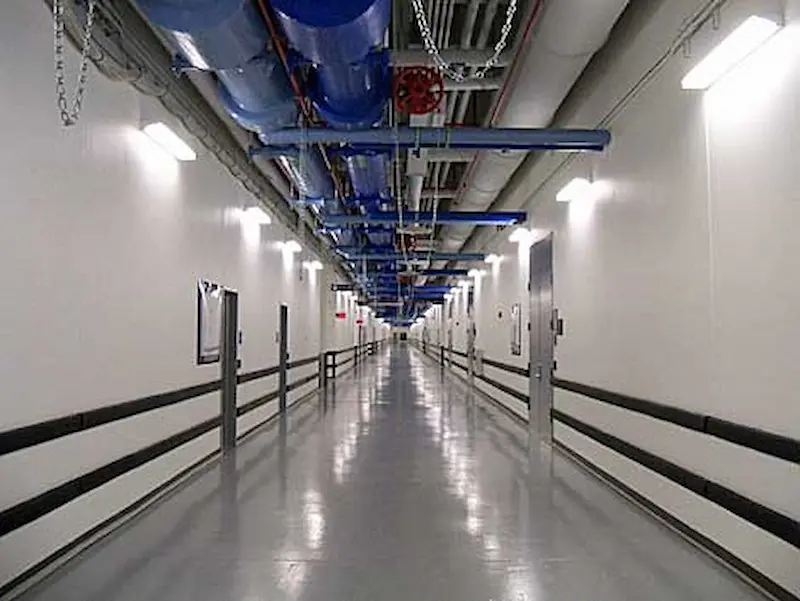
The Empty Floor Phenomenon Today, if you visit the New York Stock Exchange, you might be surprised. The chaotic crowds are gone. The floor is quiet.
The Show: The people you see on TV are mostly media personnel or market makers monitoring screens.
The Reality: The “real” exchange has moved to data centers in New Jersey. The trading floor is no longer a physical place; it is a digital cloud.
Inside the Modern NYSE: The Sound of Silence
3.2. The Modern Floor: Humans as Pilots, Not Drivers
While most exchanges (like NASDAQ) have become 100% electronic, the New York Stock Exchange (NYSE) remains unique. It is a “Hybrid Market.”
The New Role: The people you see on the floor today are “Designated Market Makers” (DMMs). They no longer shout to find buyers.
The Mission: They stand amidst a wall of screens to monitor the algorithms. When the market becomes too volatile or erratic for the code to handle (like during a crash or an IPO), these humans step in to stabilize the ship. They are no longer the engine; they are the emergency brakes.
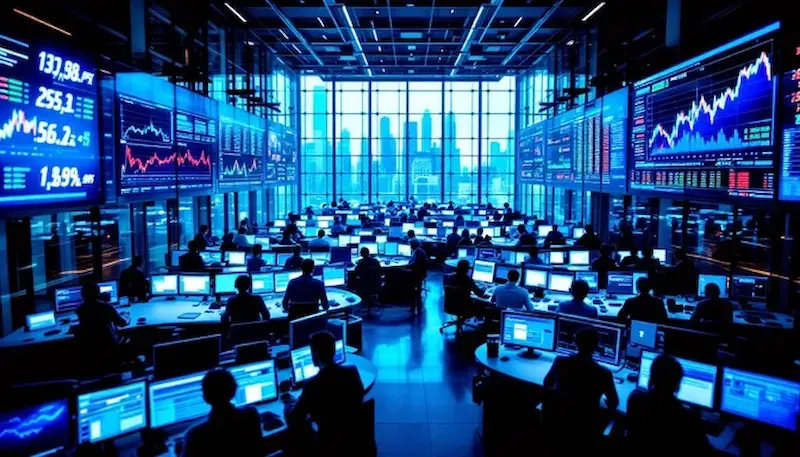
Money Bots: The Invisible War of Algorithms
Conclusion: The Evolution of the Trader
From the noisy coffee houses of London to the silent server farms of New Jersey, this 400-year journey through stock market history proves that speed is the ultimate currency.
1700s: Speed of a shout (Human).
1980s: Speed of a click (Computer).
2020s: Speed of light (AI).
Looking back at stock market history, we see a drastic shift from human shouts to silent algorithms.The market is no longer a place where people meet to trade. It is a battlefield where algorithms compete for invisible pennies. The era of human execution is over; we have stepped back to become the silent supervisors of the machine age. As we look forward, the next phase of stock market history will likely be written by algorithms, not humans.
Frequently Asked Questions about Stock Market History
When did stock market history begin? It officially began with the Dutch East India Company in 1602, but coffee house trading in London shaped much of modern stock market history.
What is the biggest crash in stock market history? The 1929 Great Crash and Black Monday 1987 are two of the most significant downturns recorded in stock market history.
How has technology changed stock market history? Technology shifted the market from open outcry pits to the current era of AI dominance, marking a new chapter in stock market history.